Archive | Uncategorized RSS feed for this section

The Colour Box- New Novel will be on Amazon March 15

25 Feb

I am pleased to announce the new historical novel based on the lives of two sisters who lived on Antigua in 1800s will soon be available. Watch for it on : BarbaraWaiteBooks.com

I remember as a child enjoying those work sheets in school where dots with numbers or letters were connected to reveal a picture of a flower, a tree etc. As a child I enjoyed discovering what picture the dots would reveal.

While in New Jersey a year ago we visited a museum  that connected some of the links of Elsie’s Gilman family history for me, and I felt rather like a dot to dot picture was disclosed.

When the Revolutionary War ended, the United States spent nearly a decade without a regular navy. With the war against Great Britain won, the reasoning went, why would it need a navy? The simple answer is: pirates.

After breaking with England, 1783, the American War for Independence officially ended. Thus, American merchant ships no longer were protected by the Royal Navy. The fledgling U.S. government couldn’t raise a Navy but believed it could stave off attacks from Barbary pirates — north African privateers from Algiers, Morocco, Tunis, and Tripoli by paying the tributes demanded by pirates.

While the Moroccan pirates cooperated, the Algerian leader declared war on the United States, capturing a merchant ship in 1784.

Without a protecting force American trade to the Mediterranean would always be insecure. Desperate to utilize the Mediterranean trade route and protect American ships, the 1794 Congress, at George Washington’s urging, authorized a fleet of six U.S. Navy ships.

In the current novel I am writing I slipped in an imaginary connection between the Hart sisters of Antigua and my Grandmother Elsie’s grandmother, Malvina Amanda Gilman born in 1810 in Alexandria, Va.

Her father, Ephraim Gilman, was born in Gilmantown, N.H. in 1778. Twenty -seven year old Ephraim married 18 year old Anne Crawford in 1805, the same year Elizabeth Hart married Charles Thwaites in Antigua.

Ephaim was a merchant that owned ships which sailed to foreign parts. I assume he sailed to the Caribbean because my  tattered family history papers say he brought back cotton and molasses, both grown in Antigua.  Ephaim became prosperous merchant. In the war of 1812 the British burned his warehouse and schooner of flour.

The Gilman family came to America on the good ship Diligent in 1638 due to religious persecution in England. The census ledger of 1810 records that Ephraim imported Moroccan shoes.  When I read about the beginning of our US Navy in the maritime museum in Philadelphia, I realized how the dots connected.

By 1801, the pirates of Tripoli had launched a full-on campaign against the U.S. that would later be referred to as the First Barbary War. The1805 victory for the U.S. Navy would mark the first win.

The Second Barbary War launched in 1812 —was the same year that the United States began warring once more with Great Britain. With its resources spread thin, the U.S. government tabled any efforts to confront Algiers or its pirates.

It wasn’t until 1814, ending the United States’ last skirmish with England, that the Navy was able to set its sights on Algiers — and an end to Barbary piracy once and for all. Congress officially declared war on Algiers March 3, 1815, after growing the U.S. Navy for three years. Ephraim died in Washington, D.C. in 1853. Thus the creation of the US Navy allowed him  quite a few years to secure his fortunes as a shipping merchant.

It was fun to slip a Gilman relative into the story of the Harts sisters in Antigua.

My new website for the book is found at www.BarbaraWaiteBooks.com


August 10&11, (Fri/Sat) Elsie is FREE on Amazon Kindle

10 Aug

I am doing another 48 hour promotion of Elsie – Arizona Teacher 1913-1916. If you do not have a kindle I am told that this app will work so you can read on computer or certain phones.

I would love some new reviews but am VERY thankful for 50 -mostly 5 star. Thanks readers. Reviews help it sell. Giving it away on kindle seems to boost sales. Please tell or share this with friends. Thanks.
If you don’t have a kindle you can use this free reading appshttp://www.amazon.com/gp/feature.html?ie=UTF8&docId=1000493771

Free Kindle Apps – Read eBooks on your Phone, Tablet, or Computer

www.amazon.com

You don’t need to own a Kindle to enjoy Kindle books. Just get a free Kindle app for Android, iPad, iPhone, PC, Mac, BlackBerry, or Windows Phone 7.

I want to share with you one of the delightful perks of hearing from readers in areas distant from Arizona.

Den Adler, from Wisconsin purchased ELSIE when visiting Arizona. He has written a generous review and now this nice article.  Den Adler wrote:

Former University of Wisconsin-Madison writing teacher Marshall Cook’s e-newletter Extra Innings came out today, and my essay about your book is on page three. Hope you enjoy it.


In praise of teachers from long ago

By DEN ADLER

“Elsie Haye s Roberts often told her granddaughter,

Barbara Anne Waite, stories about the happy years
she taught school in primitive Arizona from 1913
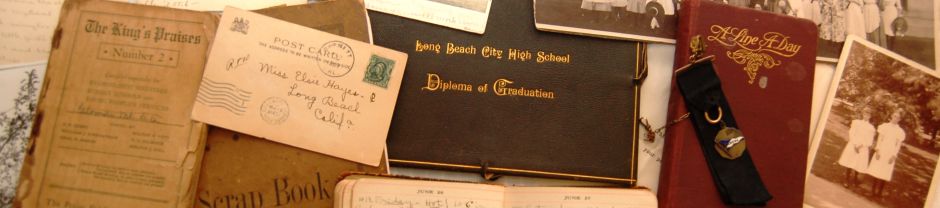
to 1916. Elsie Hayes, valedictorian of the Long
Beach, CA, High School’s class of 1907, had been
hired as a mail-order teacher in Arizona just after
it was admitted to statehood and when Cornville,
the first town she taught in, lacked electricity and
running water.
After her grandmother died in 1987, Waite
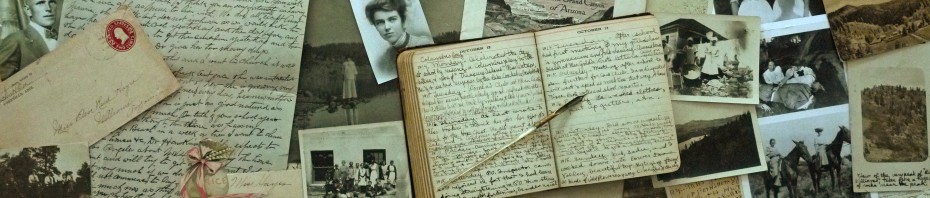
began reading her grandmother’s “well-worn
black leather diary, not realizing it would reveal a
young Elsie I had never imagined. The diary told
of her first love, of heartache and sorrow, and of
fascinating adventure. Never had I pictured my
grandmother as being free-spirited, young, and in

love. My curiosity was stirred, and I began to
search for more records of her Arizona years.”
Thank goodness her granddaughter didn’t just
read and file the diary away as a family keepsake.
Instead, Barb Waite started researching letters and
newspapers and searched out and interviewedElsie’s

former students, including 84-year-old
Eva, who was eight when Elsie lived with her
family on Shadyvale Ranch in 1913.
Waite sent her questions to a newspaper near
Cornville (which was still too small to have its
own), and Eva answered. “I certainly do
remember Elsie Hayes,” she wrote. “She was my
third grade teacher, and I loved her! … The area
here was very primitive at that time, and my folks
wondered how the teachers would ever adjust to our ways of living.

But your grandmother, especially, adjusted beautifully.”
I discovered Elsie: Adventures of an Arizona
Schoolteacher 1913-1916 in an Arizona gift shop
during a recent visit with a friend. In this case, I
judged a book by its cover. Elsie was very pretty,
and her photograph surrounded by memorabilia
from that time, with mention of 1916, the year my
dad was born, led me to pick up the book.
Waite includes short notes to help readers
understand items in Elsie’s diary and letters and
inserted delightful photographs that Elsie took of
her students and their surroundings.
The book tells of Karl, a cowboy who fell in love with Elsie
and entered college to make himself worthy of her.
Decades later, Waite’s question about her grandmother’s early loves brought Elsie to
tears. “There was this cowboy …,” she began, but that’s all she said, and Waite
didn’t discover the reason for the tears until she read Elsie’s diary and discovered
newspaper clippings. The book also includes memories from Elsie’s now-aging students,

which remind us that we will usually never know the influence we have had in
children’s lives. I was reminded of Elsie’s story a couple of weeks ago when a friend and I had one of our photographic day trips, this time to Old World Wisconsin, a living museum in the Kettle Moraine area south of Eagle. OWW is made up of 18th and early 19th-century buildings relocated from all over Wisconsin. This photo shows the one-room Raspberry School in the Norwegian Area, and the re-enactor “teacher” is outside the door with a basket. The day was ending, and I didn’t have time to visit the school or meet her.
With only a few minutes until closing time, I stupidly didn’t wait for a tram to carry me back to the entrance but instead started walking, as I had been doing the entire day. I chose the wrong route, however, and after 20 minutes, when I saw a tram approaching I waved it down. It wasn’t full of visitors like me, but of reenactors heading to their cars. The teacher was sitting across from me and was telling her coworkers that a 12-year-old boy made her day when he asked, “Were all the teachers back then as nice as you are?”

I wanted to tell her I knew of one who was.”

Thanks Den for this great article!

If you are interested I have had fun adding a board on Pinterest that is mainly Victorian

photos and paintings of women and children reading. There are some fun quotes about reading.

The site is :http://pinterest.com/barbarawaite/book-lover-paintings-quotes/

The photo of girl with a Kodak camera is from 1910 and I imagine it is much like the one Elsie

took to college and then to Arizona.  It is also included on my Pinterest page.

Thanks readers for letting me know you have enjoyed my book. It is a huge blessing to hear from readers and reviews are chocolate incing on the cake !